IELTS Reading Academic: Structure and How to Score High
Updated
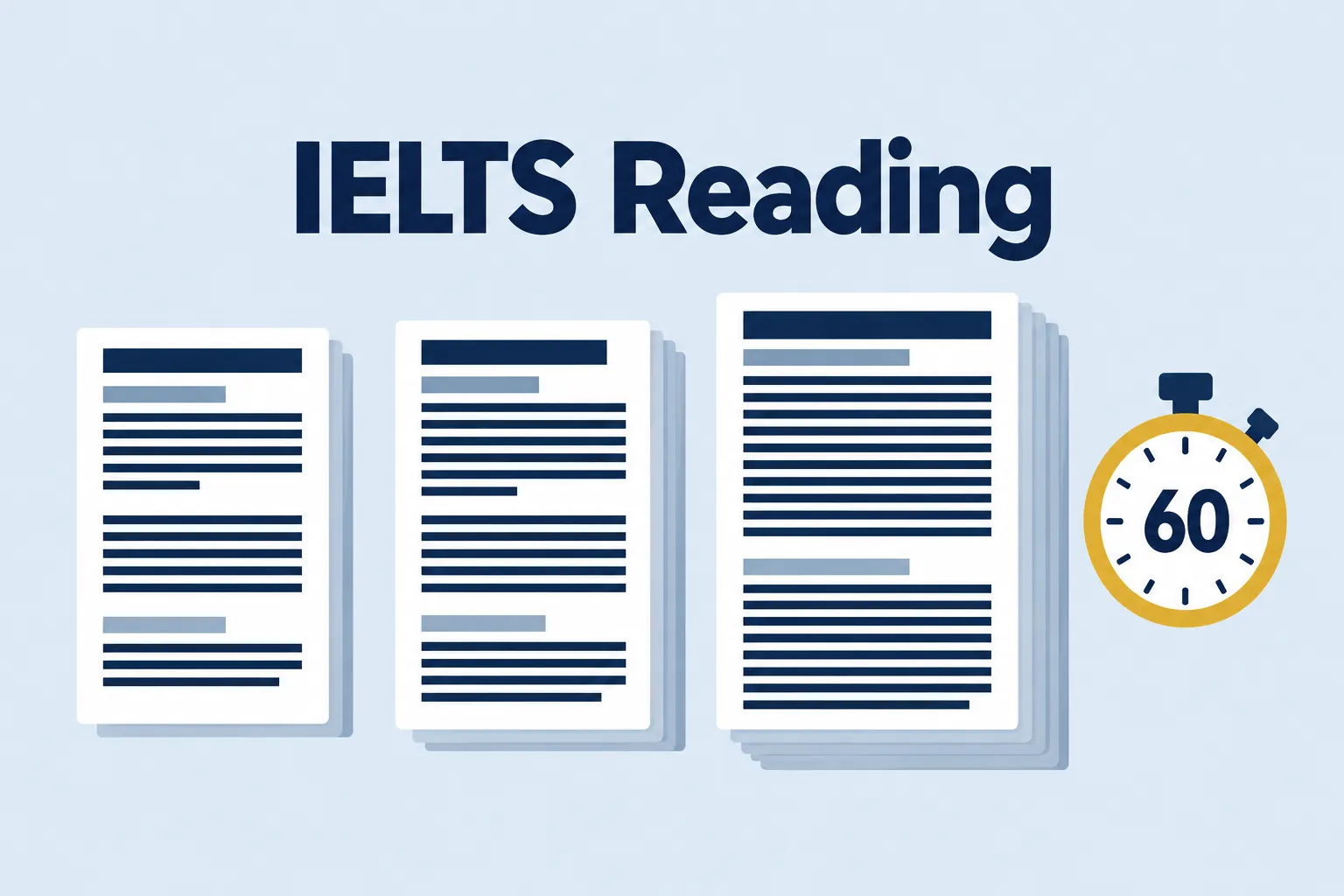
Reading Academic is 60 minutes, 3 passages, 40 questions. The passages are taken from general-interest academic sources and written for a non-specialist audience: books, journals, magazines and newspapers on science, history, psychology, environment, technology and similar topics. Specialist knowledge is not required and does not help: you must answer only according to the passage.
The main problem is not speed, but method
Test takers usually complain that they do not have enough time for the third passage. The reason is almost always three habits:
- reading the whole passage before looking at the questions, as at school;
- searching for each answer across the entire passage again;
- getting stuck on one difficult question.
Remove these habits and you will free up 10–15 minutes.
Timing
The passages go in order of increasing difficulty:
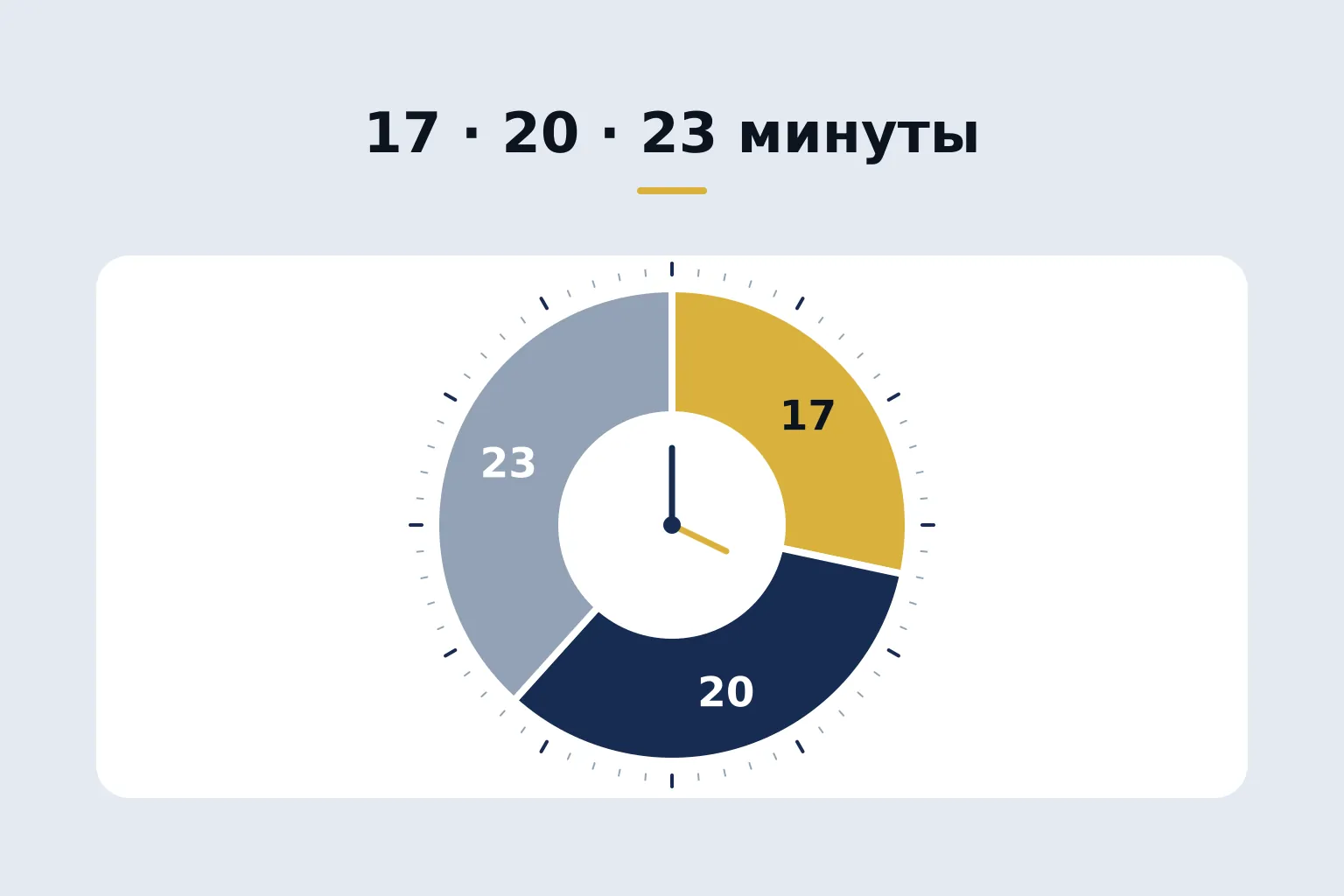
- Passage 1: 17 minutes;
- Passage 2: 20 minutes;
- Passage 3: 23 minutes.
The 90-second rule: if a question does not yield an answer, choose the most likely option, flag it and move on. Do not leave any answer blank — there is no penalty for a wrong answer.
How to read
- Heading and first paragraph — the topic and the author's position (30–40 seconds).
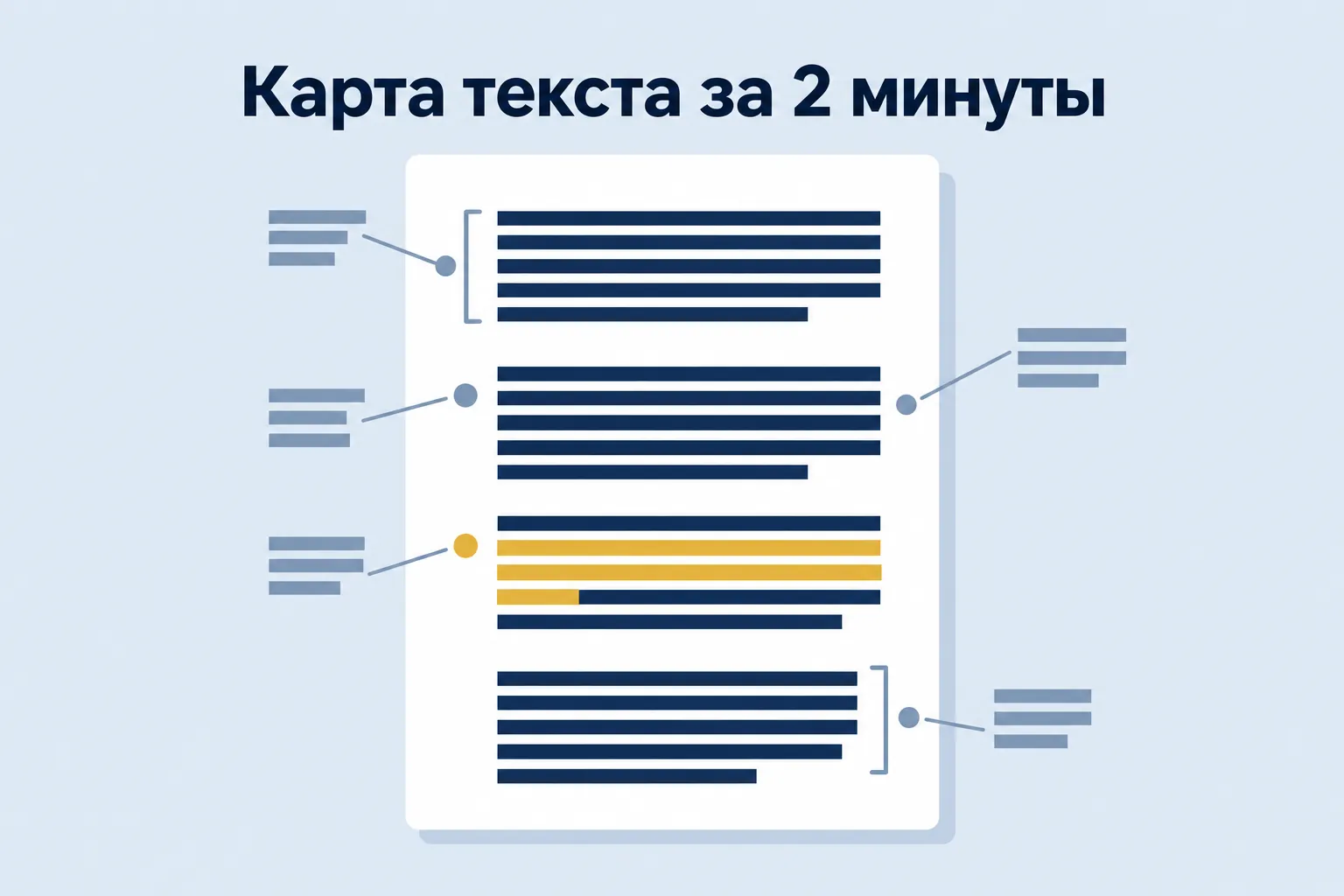
- First sentences of paragraphs — a map of the passage, one or two words in the margin for each paragraph.
- Questions in blocks. Find the location using your map.
- Close reading of the relevant fragment only.
Read quickly to find where the answer is, slowly to answer.
Which question types follow the order of the passage
- In order: True / False / Not Given, Yes / No / Not Given, multiple choice, sentence completion, short-answer questions, most summary tasks.
- Not in order: matching headings, matching information, matching features.
If the answer to question 3 is in paragraph C, look for the answer to question 4 further down.
Quick tips by question type
- True / False / Not Given: Choose False only when there is a direct contradiction with the passage. For details, see the article True / False / Not Given.
- Matching headings: first paraphrase the main idea of the paragraph in your own words, then look for the heading. Beware of headings that match a detail rather than the main idea.
- Completion: respect the word limit, take words from the passage without changing the form, and check the grammar of the gap.
- Multiple choice: locate the relevant part of the passage using the words in the question, formulate the answer yourself, then compare it with the options.
All question types in one table — in the article IELTS question types.
What you need for a high band score
As a guide, about 30 correct answers gives you band 7.0, 35 gives band 8.0, and 39–40 gives band 9.0 in Academic Reading. For the full conversion table, see the article IELTS band scores.
How to practise
- Practise passages with a timer and analyse every mistake: did you fail to locate the information, miss a paraphrase, confuse False and Not Given, or exceed the word limit?
- Keep a paraphrase bank: a decline → a fall, a drop; to cause → to lead to, to result in.
- Read popular science articles in English for 20–30 minutes a day — this is the best background practice for test takers from India, Pakistan, Nigeria and the Philippines.
A walkthrough of each question type on a practice passage, a method for error analysis and a three-week plan are in the Reading guide. You can check your current level with a full mock test.
FAQ
How many passages are in IELTS Reading Academic?
Three passages totalling about 2,500–2,800 words and 40 questions.
Is there extra time to transfer answers in Reading?
No. The 60 minutes include everything — reading, answering and transferring answers to the answer sheet.
How many correct answers do you need for band 7 in Reading?
About 30 out of 40 in Academic Reading.
Next step
Mock test
IELTS mock test
Listening, Reading, Writing and Speaking in the computer-based test format and IELTS band forecast on the 0–9 scale.
6 USDone-time
Go to mock testGuide
IELTS Reading at 8.5–9: Accuracy, Timing and Answer Logic
Reading is not about reading speed, but about accuracy. We break down the logic of each question type so you stop second-guessing yourself.
15 USD
Open guide