True/False/Not Given in IELTS Reading: How to Answer with Confidence
Updated
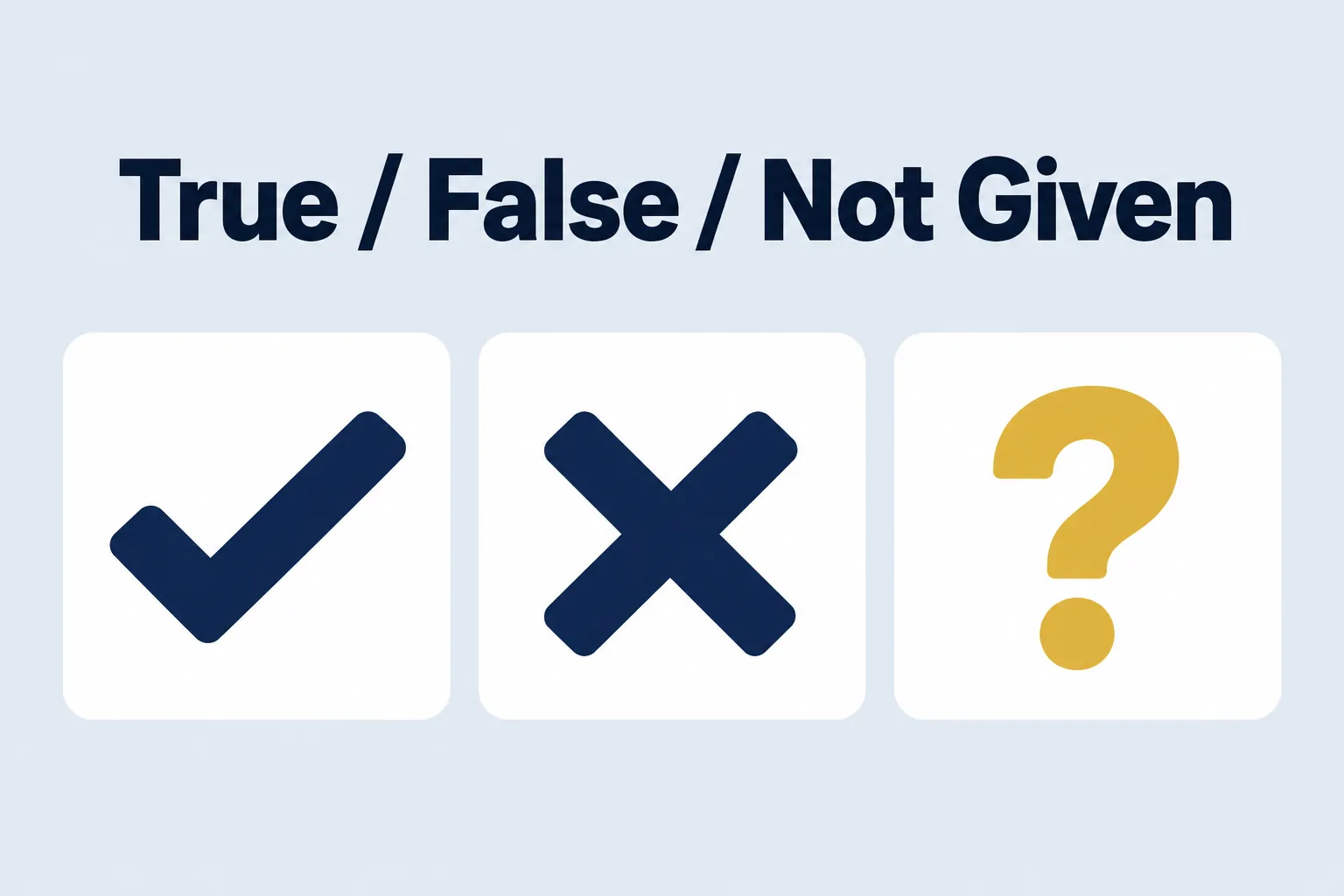
True/False/Not Given is the task where test takers hesitate most and lose marks. The good news: it follows strict logic, and once you master it, the doubt disappears.
The three answers
- True: the text says the same thing, even if in different words.
- False: the text directly says the opposite.
- Not Given: the text neither confirms nor contradicts the statement. There is no information about it, or the information is only partial.
A 3-question method
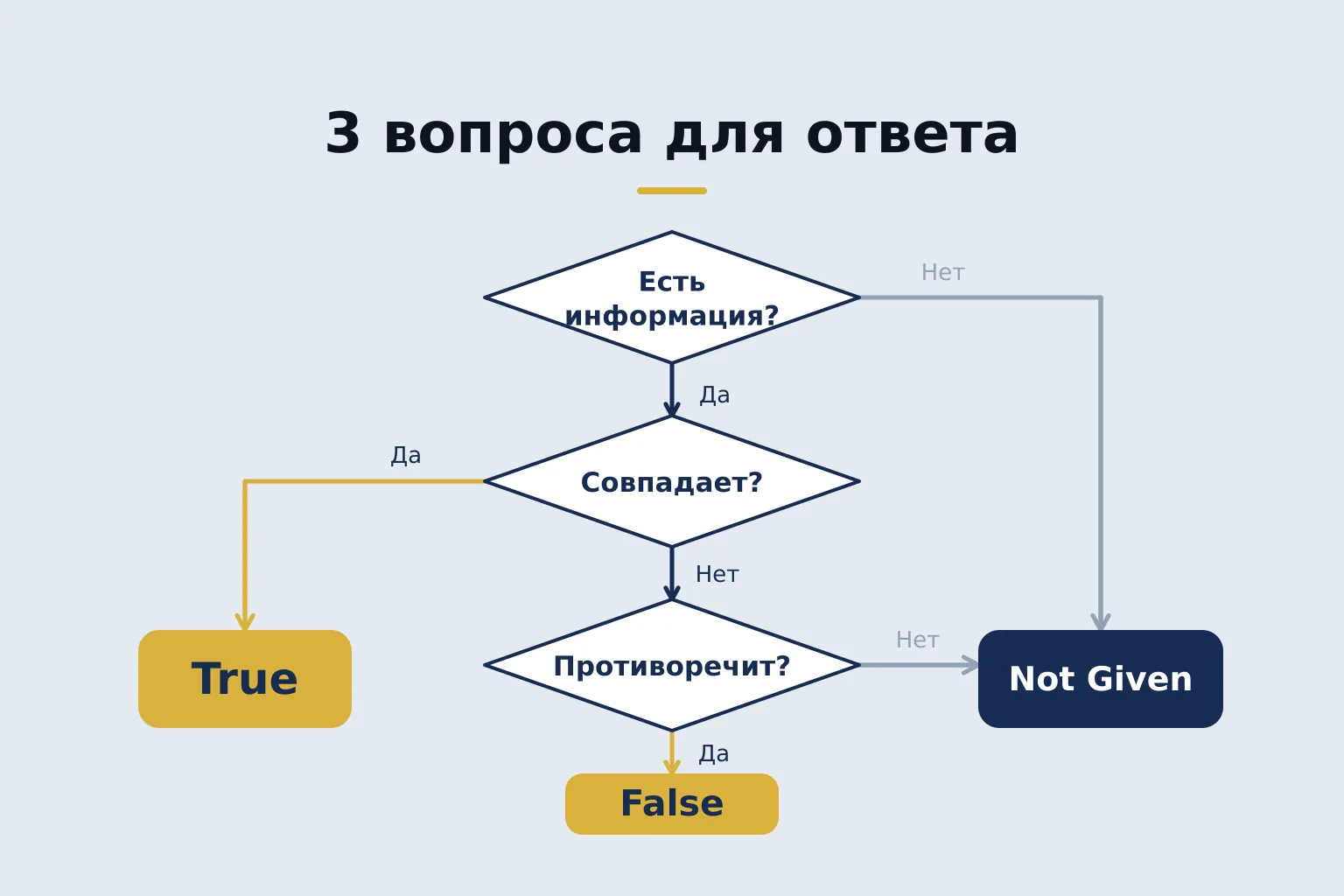
- Does the text discuss this topic? Find the location. Answers follow the order of the text.
- Does the meaning match completely? Focus on meaning, not words. If yes — True.
- Does the text directly contradict it? If yes — False. If no — Not Given.
The most common mistake is to choose False when a statement "feels untrue". Your feeling does not make a statement false. False requires a direct contradiction in the text.
Tricky qualifier words
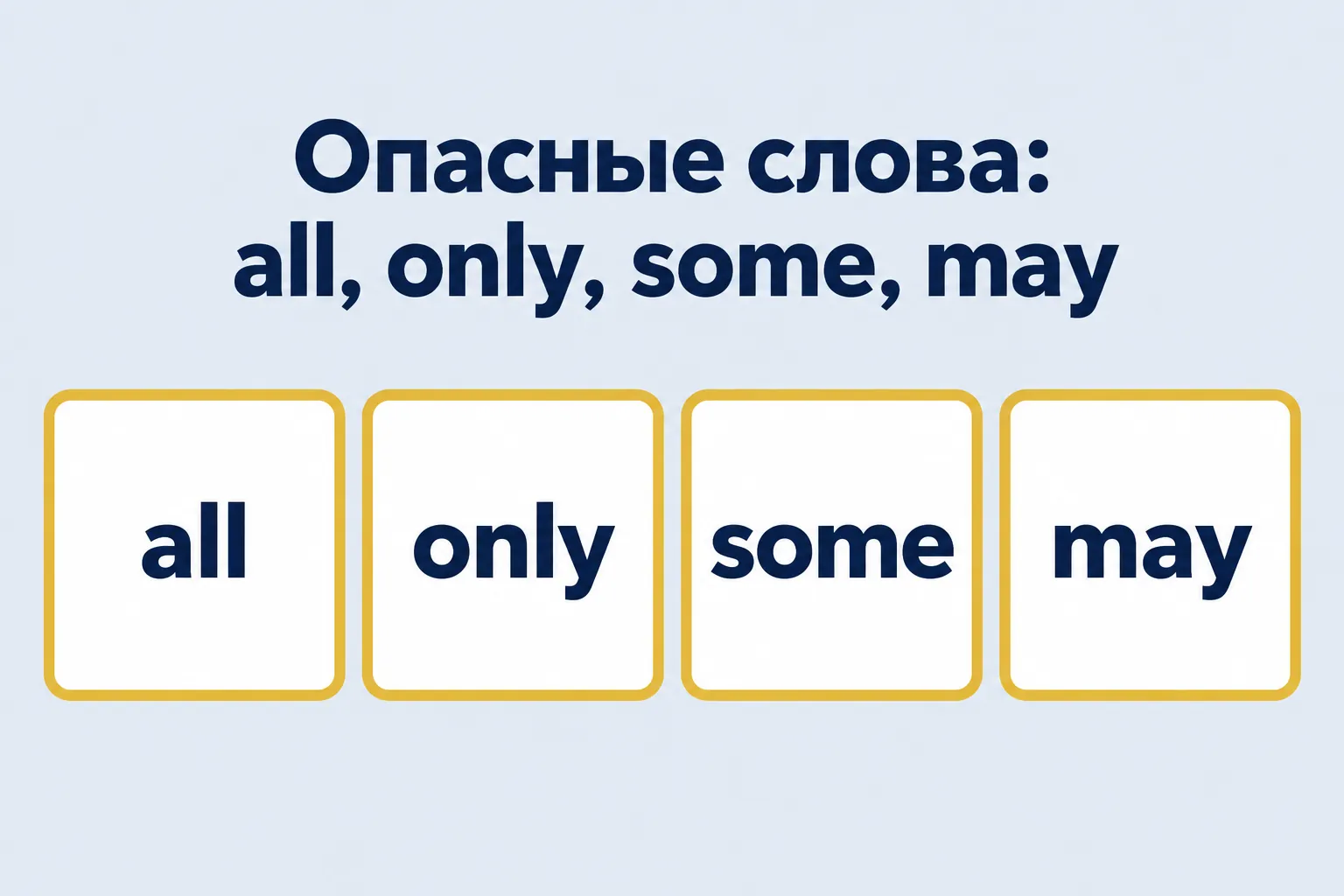
Qualifier words often decide the answer:
- quantity: all, every, most, some, a few, only, none;
- frequency: always, usually, sometimes, never;
- certainty: proved, showed, suggested, may, might, is thought to;
- order and comparison: the first, the main, more than, the largest.
If the text says some scientists believe and the statement says scientists agree, that is not True. If the text says may cause and the statement says causes, that is also not True.
Worked example
Text (written for this article):
The museum opened in 1998 in a former textile factory. Visitor numbers were modest at first, but rose sharply after a new wing dedicated to industrial design was added in 2010. Some critics argued that the extension distracted from the museum's original focus on local history.
- The museum was built specifically to house exhibitions. — False. The museum opened in a former factory, so the building was not originally constructed for exhibitions.
- Visitor numbers increased considerably after 2010. — True. Rose sharply = increased considerably.
- The new wing was more popular than the rest of the museum. — Not Given. The text says visitor numbers grew, but there is no comparison of the popularity of different parts of the museum.
- All critics welcomed the extension. — False. Some critics argued against it, so not all welcomed it.
- The museum charges an entrance fee. — Not Given. No information is given.
How to practise
- Practise 15–20 statements a day and for each one write down which words in the text prove your answer.
- If you cannot point to words that confirm True or False, it is probably Not Given.
- Keep an error log: which direction do you err more often (False instead of Not Given or vice versa)?
What next
Other Reading question types — matching headings, summary completion, multiple choice — and timing for the three passages are covered in the Reading guide. You can test yourself under exam conditions with a full mock test.
FAQ
What is the difference between False and Not Given?
False means the text directly contradicts the statement. Not Given means the text neither confirms nor contradicts it — there is no information or only partial information.
What is the difference between True/False/Not Given and Yes/No/Not Given?
True/False/Not Given tests facts given in the text, while Yes/No/Not Given tests the writer's opinions and claims. The logic for answering is the same.
Do True/False/Not Given answers follow the order of the text?
Yes. If you find the answer to question 5 in paragraph C, look for the answer to question 6 further on in the text.
Next step
Mock test
IELTS mock test
Listening, Reading, Writing and Speaking in the computer-based test format and IELTS band forecast on the 0–9 scale.
6 USDone-time
Go to mock testGuide
IELTS Reading at 8.5–9: Accuracy, Timing and Answer Logic
Reading is not about reading speed, but about accuracy. We break down the logic of each question type so you stop second-guessing yourself.
15 USD
Open guide