IELTS 4.0, 5.0, 5.5 and 6.0: What These Band Scores Mean and How to Improve
Updated
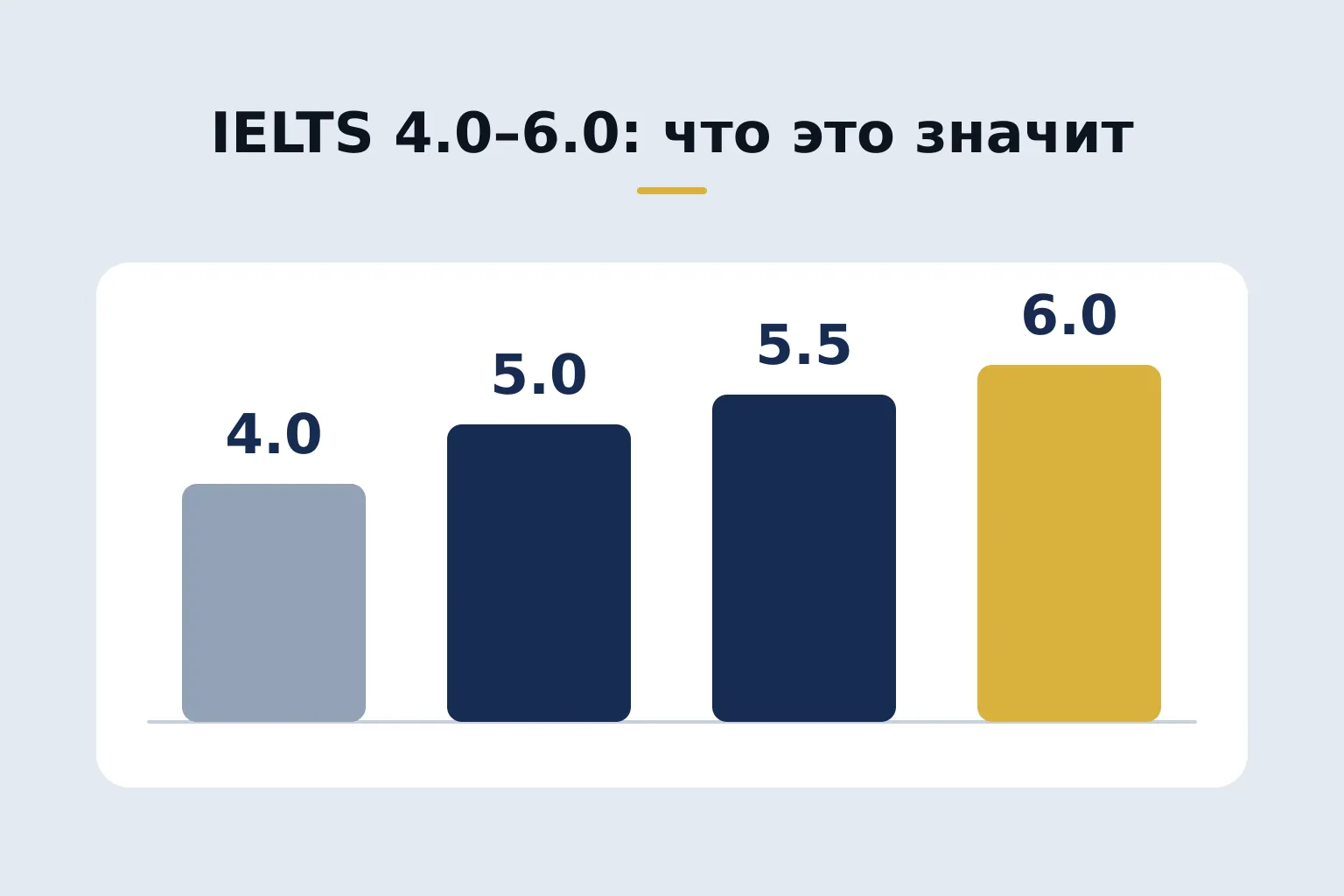
IELTS band scores are often confused with a simple pass or fail. That is not how IELTS works: there is no pass mark. Each organisation sets its own requirement. Below is what band scores from 4 to 6 mean.
Band score levels
| Band Score | CEFR | What the test taker can do |
|---|---|---|
| 4.0–4.5 | B1 (lower part) | understands and expresses basic ideas in familiar situations, makes frequent errors and struggles with complex language |
| 5.0 | B1 | modest command: general meaning is clear in most situations, but with many mistakes |
| 5.5 | B2 (lower border) | transition to independent use: copes with many tasks, but inaccurately |
| 6.0 | B2 | competent command, although errors and misunderstandings are still noticeable |
For the full mapping to C1 and C2, see the article “IELTS and CEFR”.
What these scores are enough for
- 4.0–5.0: some language and preparatory programmes, and certain visa routes where the requirement is minimal.
- 5.5: foundation and pathway programmes, some colleges in the UK, Canada, Australia and other destinations popular with students from India, Pakistan, Nigeria and the Philippines.
- 6.0: many bachelor's programmes, some master's programmes, and many work and study visa routes.
Always check the exact requirement on the official website of the university, college or immigration authority.
How many correct answers you need
| Band Score | Listening (out of 40) | Reading Academic (out of 40) |
|---|---|---|
| 6.0 | 23–25 | 23–26 |
| 5.5 | 18–22 | 19–22 |
| 5.0 | 16–17 | 15–18 |
| 4.5 | 13–15 | — |
| 4.0 | 11–12 | — |
These tables are approximate; for the full tables see the article “IELTS Band Scores”.
How to move to the next level
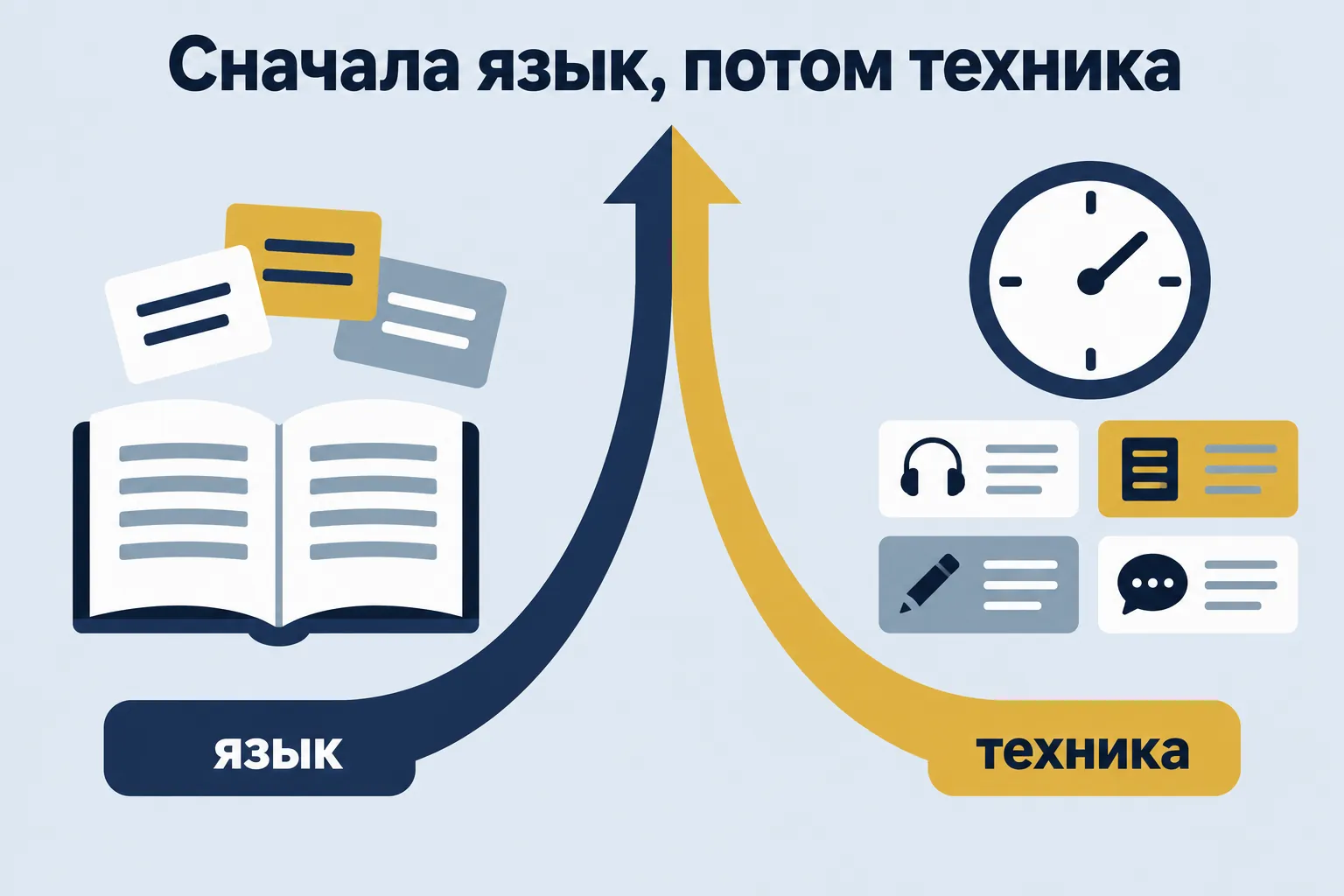
From 4.0–5.0 to 5.5–6.0 the main focus is language, not exam technique:
- daily reading and listening — start with graded materials, then move to authentic sources;
- core grammar: tenses, articles, prepositions, word order;
- vocabulary for common IELTS topics: education, work, technology, environment, health;
- practise Speaking for at least 10 minutes every day.
From 5.5–6.0 to 6.5–7.0 you need both language and technique:
- knowledge of all task types and their traps;
- structure for Writing Task 1 and Task 2 and how to develop ideas to meet Task Achievement and Task Response, Coherence and Cohesion, Lexical Resource and Grammatical Range and Accuracy;
- extended answers in Speaking to improve Fluency and Coherence, Lexical Resource, Grammatical Range and Accuracy and Pronunciation.
For more on band 6.5 and the step to 7.0, see the article “IELTS 6.5”. Start with a mock test to find out which skill — Listening, Reading, Writing or Speaking — is your weakest and needs the most work.
FAQ
What level is IELTS 5.0?
Approximately B1, the upper part of the threshold level.
Is IELTS 6.0 B2?
Yes, 6.0 falls within the B2 range (5.5–6.5).
Can I get admission with IELTS 6.0?
Yes, for many bachelor's programmes and some master's programmes. Competitive universities usually require 6.5–7.0.
Next step
Mock test
IELTS mock test
Listening, Reading, Writing and Speaking in the computer-based test format and IELTS band forecast on the 0–9 scale.
6 USDone-time
Go to mock testGuide
IELTS Academic for 8+: The Complete Preparation Strategy
The complete strategy: from diagnosis to exam day. No filler and no memorised templates.
15 USD
Open guide