What Has Changed in IELTS in 2026
Updated
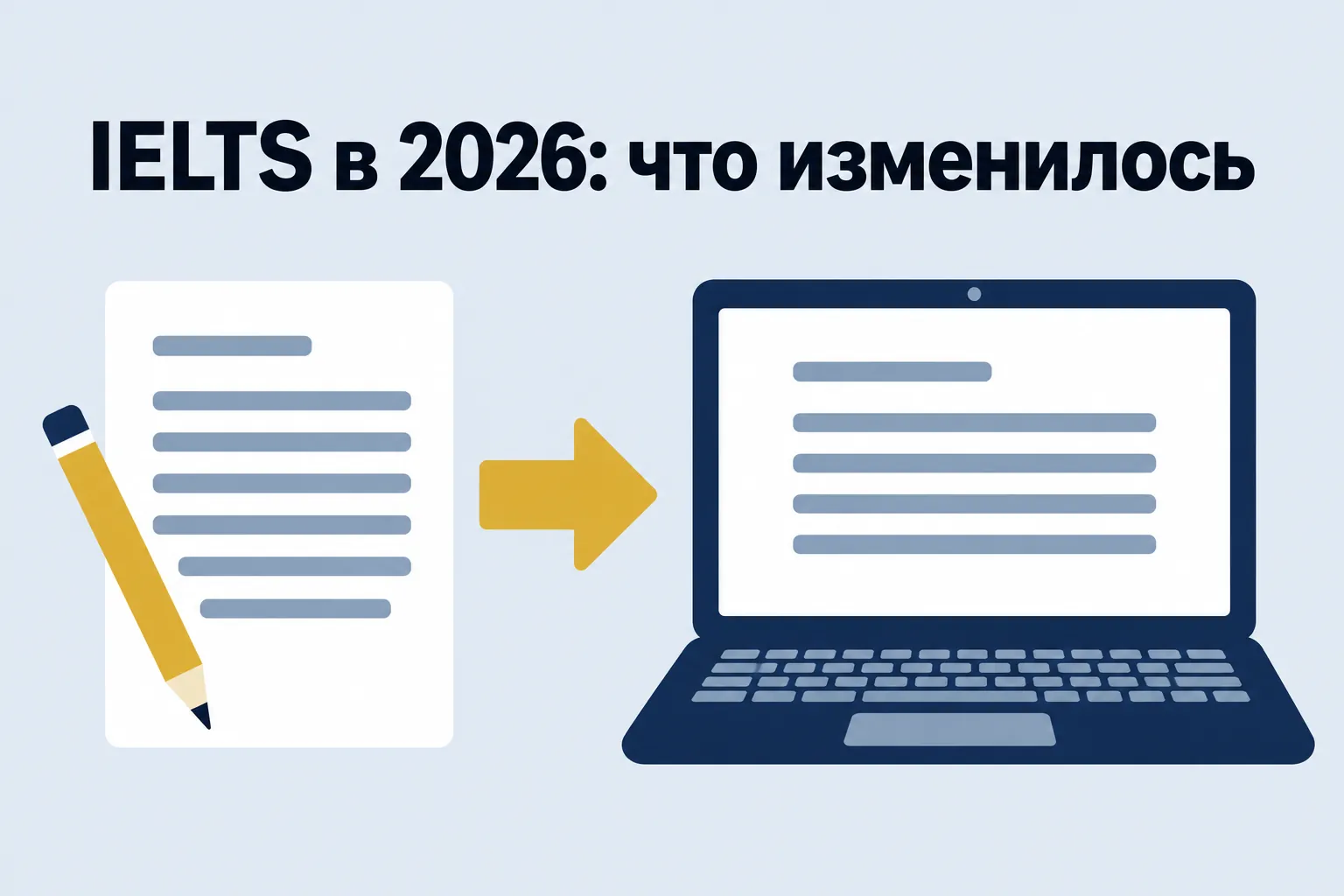
In short: the content of the test has not changed — the way you take it has. The tasks, number of questions, timings and assessment criteria remain the same. The main news this year is the move to computer.
Move to Computer
On 5 March 2026 the IELTS organisers announced that from mid-2026 the test will be delivered on computer. Timelines depend on the country: in some test centres the paper-based format has already been withdrawn, in others it is being phased out gradually. This applies to test centres in India, Pakistan, Nigeria and the Philippines, but exact dates vary by centre — always check your chosen test centre.
What this means for your preparation:
- Practise in the computer-based interface: entering answers, navigating between questions, highlighting text and flagging questions for review.
- In Listening on computer there is no 10 minutes for transferring answers — you have 2 minutes at the end to check your answers. You enter your answers directly while you listen.
- In Writing you type your answers and a word counter is visible on the screen. If you type slowly in English, start to practise this in advance.
- Results for the computer-based test arrive faster: usually within 1–5 days.
Writing on Paper
In some countries a hybrid option is being introduced: Listening and Reading on computer, and Writing by hand on paper. If your test centre offers this format, practise Writing by hand, watch your handwriting and count your words carefully — there is no word counter on paper.
One Skill Retake
You can retake one skill without resitting the whole test within 60 days of your original test, once only, only after a computer-based test and not at every test centre. For details, see the article “One Skill Retake”.
What Has Not Changed
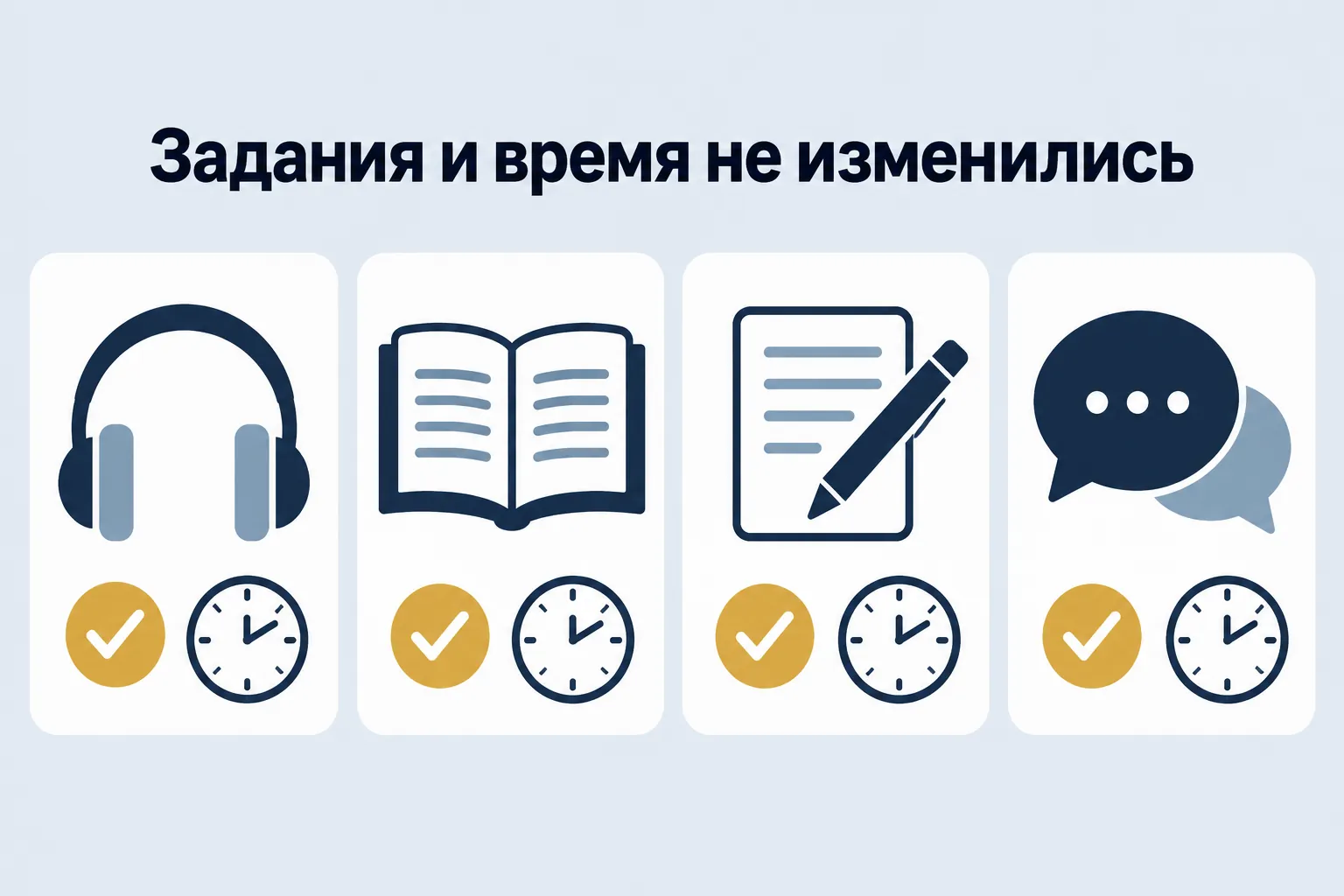
- Structure: Listening about 30 minutes, Reading 60 minutes, Writing 60 minutes, Speaking 11–14 minutes. For details, see IELTS Academic format.
- Speaking is still held face-to-face with an examiner.
- The assessment criteria for Writing and Speaking. The last update to the wording of the Writing criteria was in May 2023.
- The Overall band score calculation. For details, see IELTS band scores.
How to Prepare in the New Format
Our mock test is built like the computer-based IELTS: timed sections, highlighter, notes, flags and navigation by question number. Take at least two full mock tests in this interface before your real test.
FAQ
Is IELTS now computer-based only?
From mid-2026 IELTS is moving to a computer-based format, with timelines varying by country. In some countries a hybrid option remains: you take Writing on paper while Listening and Reading are on computer.
Have the tasks and timings changed in 2026?
No. The structure of each part, the number of questions and the timings remain the same.
Have the Writing assessment criteria changed?
The last update was in May 2023, when the wording was simplified. The four assessment criteria remain the same.
Next step
Mock test
IELTS mock test
Listening, Reading, Writing and Speaking in the computer-based test format and IELTS band forecast on the 0–9 scale.
6 USDone-time
Go to mock testGuide
IELTS Academic for 8+: The Complete Preparation Strategy
The complete strategy: from diagnosis to exam day. No filler and no memorised templates.
15 USD
Open guide