IELTS Vocabulary: What to Learn and How to Boost Your Band Score
Updated
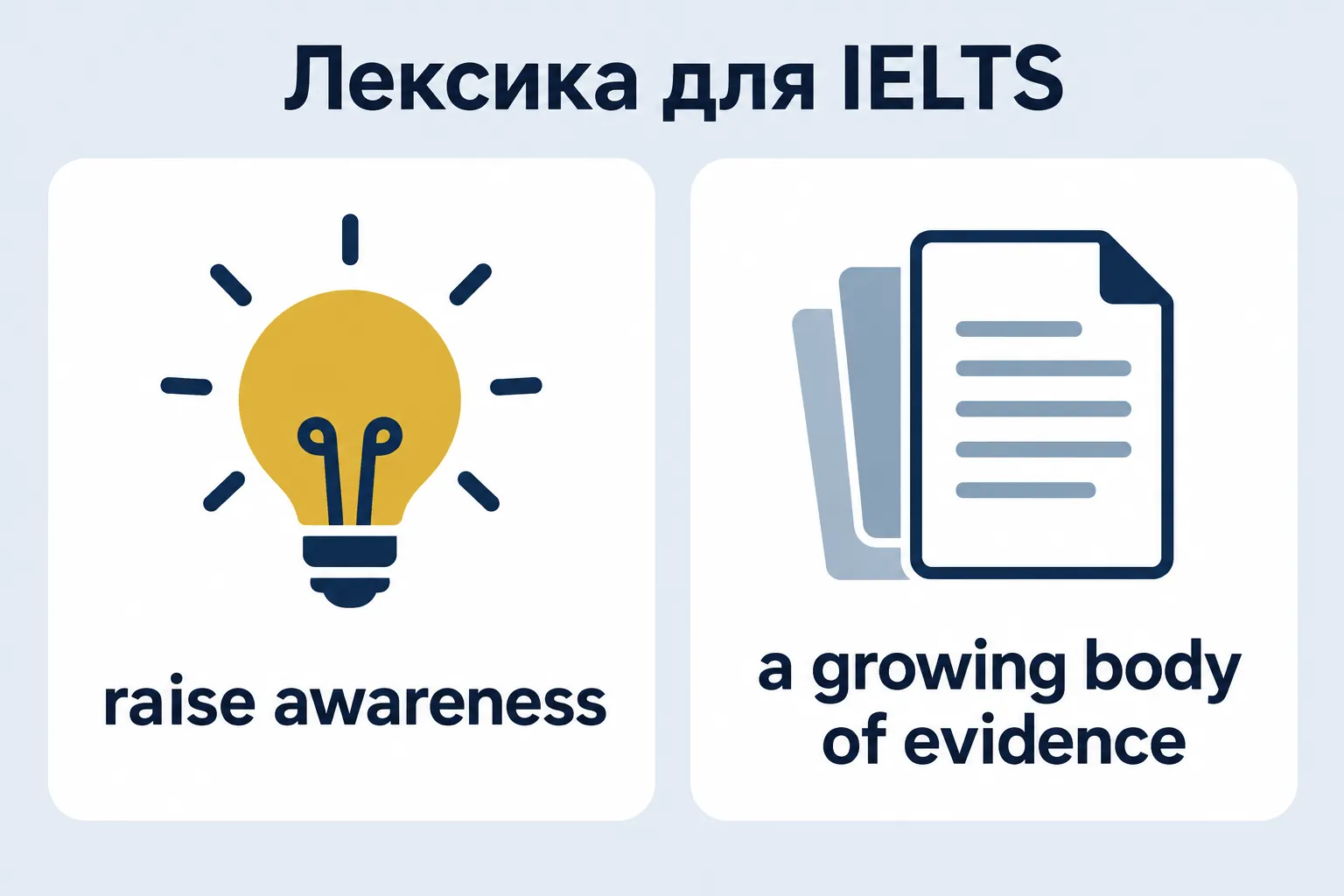
The main mistake is learning lists of "band 9 words". The examiner does not reward rare words — they reward accuracy and naturalness: whether the word fits the meaning, collocates correctly with the words around it, and is appropriate for the style.
Learn collocations, not single words
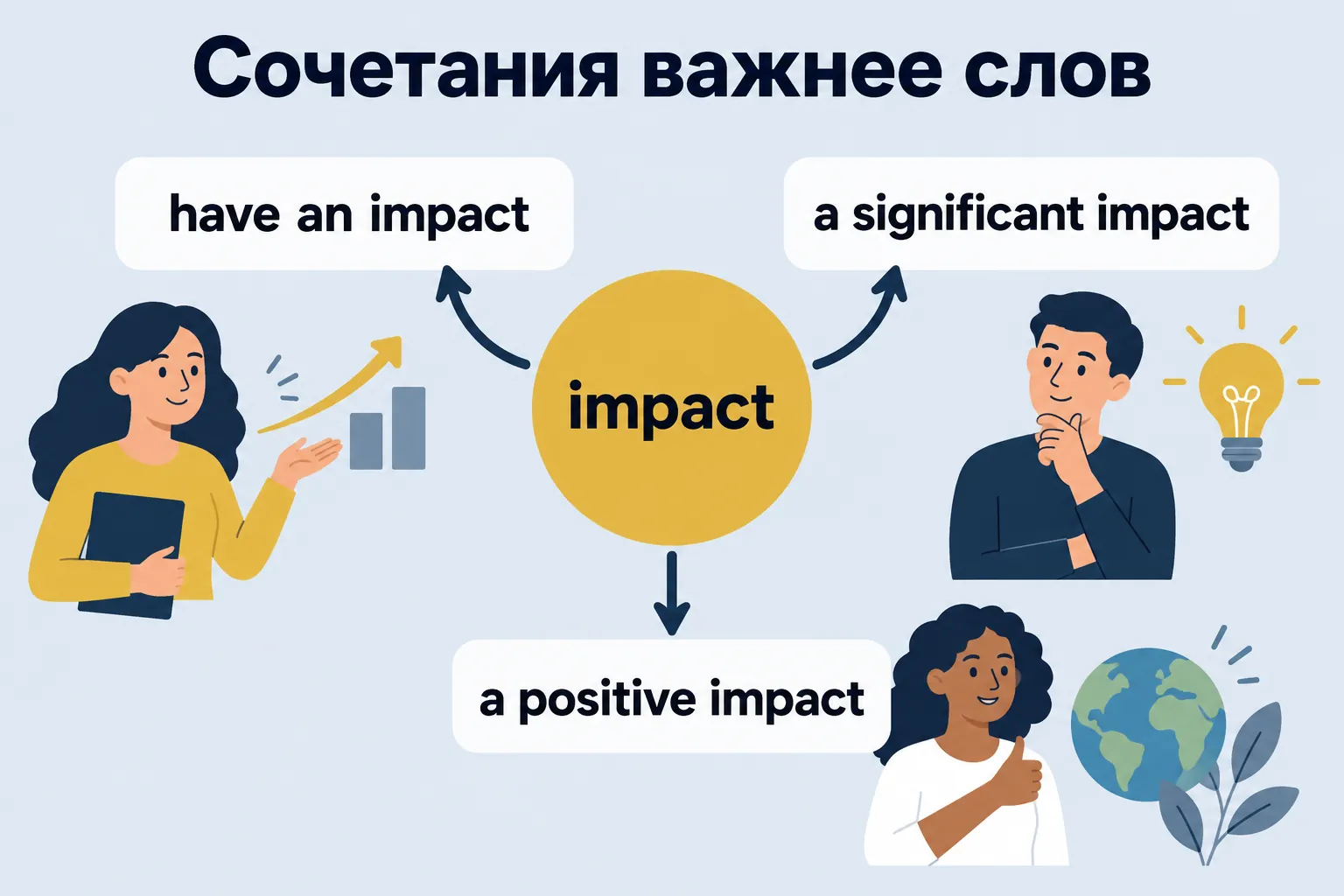
Everyone knows the word impact. What earns marks is the collocation:
- to have a significant impact on
- to minimise the impact of
- the long-term impact
More useful academic collocations:
| Topic | Collocations |
|---|---|
| Research | a growing body of evidence, to cast doubt on, to draw a conclusion, findings suggest that |
| Problems | to tackle a problem, to pose a threat to, a pressing issue, to address concerns |
| Change | to undergo a transformation, a gradual shift towards, to keep pace with |
| Society | to raise awareness, to bridge the gap, social cohesion, the cost of living |
| Economy | to boost the economy, a competitive labour market, to cut costs, a heavy burden on taxpayers |
Topics that keep coming up
Reading passages, Writing Task 2 essays and Speaking questions revolve around the same topics:
education · work and career · technology · environment · health · cities and transport · media · crime and law · globalisation · culture and traditions · science · family · tourism · sport · government and society.
For each topic, collect 20–30 collocations and one or two examples where you use them yourself.
Vocabulary for Writing Task 1
- Trends: rise, climb, surge, decline, dip, level off, fluctuate, peak.
- Degree: slightly, moderately, considerably, dramatically.
- Proportions: just under a quarter, well over half, roughly a third.
- Comparison: twice as high as, overtook, the second largest.
For more detail with examples, see IELTS Writing Task 1: Sample Answers.
Vocabulary for Speaking
In Speaking, natural, conversational language with phrasal verbs scores higher:
- I'm really into..., it's not really my thing, I can take it or leave it
- every now and then, once in a while, I tend to...
- it comes down to..., that's partly why..., to be honest...
Academic vocabulary sounds unnatural in Speaking: I possess a considerable interest in culinary activities is worse than I'm really into cooking.
Paraphrasing is the key skill
In Listening and Reading, answers are hidden behind synonyms, and in Writing and Speaking paraphrasing raises your score for Lexical Resource. Keep a paraphrase bank: increase → rise, growth, go up; problem → issue, drawback, challenge; important → essential, crucial, of great significance.
How to learn vocabulary so you actually use it
- Take words from context: from Reading passages and Listening recordings you have already analysed.
- Record the whole collocation with an example sentence.
- Use the word yourself in three sentences: in speaking and in writing.
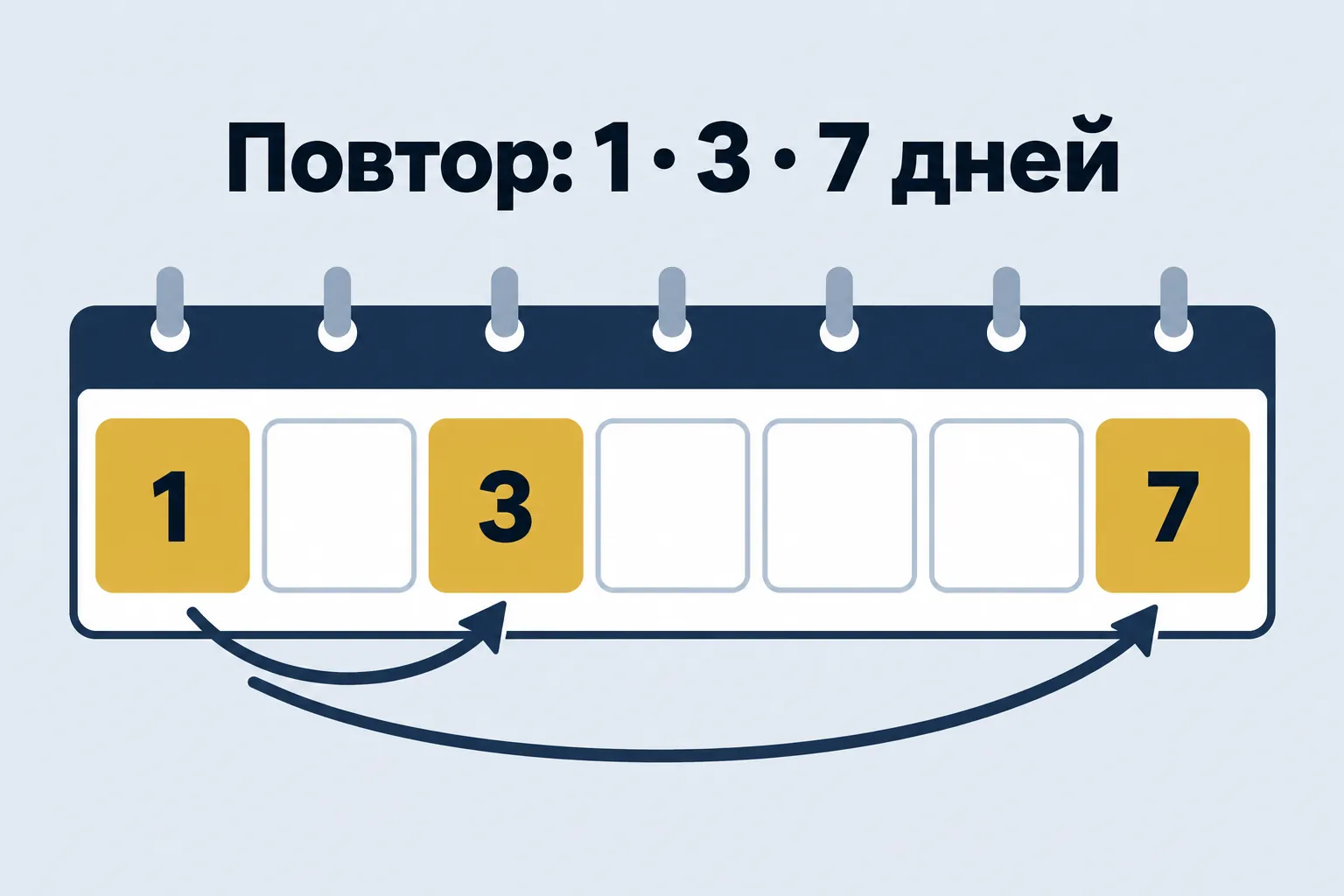
- Revise at intervals: after one day, after three days, after a week.
- Check collocation in a collocation dictionary before you use a word in an essay.
Common mistakes to avoid
- false friends: actual (does not mean "current"), sympathetic (does not mean "nice"), prospects vs perspectives;
- direct translation errors: make a photo, in the Internet, discuss about;
- informations, advices, researches — these words are uncountable.
For more on vocabulary for a band 8 essay and where a "clever word" lowers your score, see the IELTS Writing guide for band 8.
FAQ
How many words do I need to know for IELTS band 7?
There is no exact number. What matters is not the size of your vocabulary, but how accurately you use words in collocations and how well you can paraphrase.
Do rare words help increase my band score?
No, if they are used inaccurately. Inappropriate 'advanced' vocabulary lowers your score for Lexical Resource.
Next step
Mock test
IELTS mock test
Listening, Reading, Writing and Speaking in the computer-based test format and IELTS band forecast on the 0–9 scale.
6 USDone-time
Go to mock testGuide
IELTS Writing at 8–9: How Top-Level Texts Are Written
Writing is the most difficult part of the exam for most test takers. Here we break down what actually earns an 8 and why 'clever words' do not help.
15 USD
Open guide